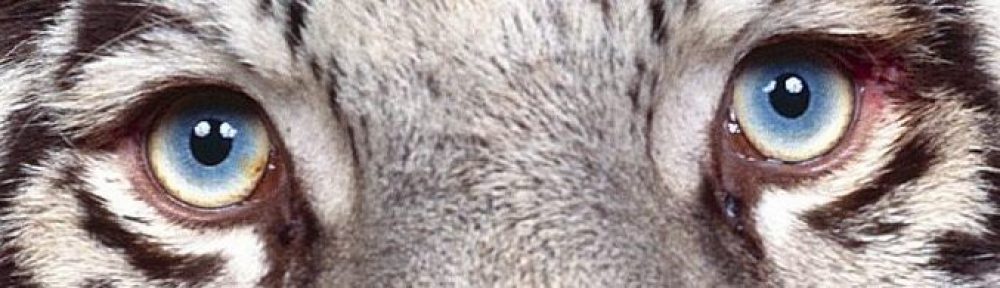
White roses and white lions

It is another warm, sunny day today with the thermometer weighing in at 22° C (72° F).

There were quite a few people about and a sizeable fraction of them – maybe 30% – no longer maintain even the pretence of social distancing. If allowed to, they will practically brush past you. Others are wearing masks and these generally do keep their distance.

Cumberland Gardens
Cumberland Gardens

We walked through this passage between the fronts of a row of houses and gardens of another row of houses set at right-angles to them. It bears the name of Cumberland Gardens. It’s one of those addresses that you would never find unless you happened to know where it is.

White roses
White roses

Beside the walkway was a large rose bush – practically a tree – full of white blooms. They were bouncing in the breeze which somehow enhanced their beauty.

White lions
White lions

One of the curiosities of Islington, or, at least, the district where we live, is the number of lions you encounter here. The photo shows a pair attached to these houses. There is a matching lion on the roof next door but it was partially hidden behind scaffolding.

As well as stone lions there are plaques representing lion heads or faces while lion door-knockers are also very common. Most of these lions show their age and perhaps date from when the houses were first built. I do not know why this animal is so popular but I am rather fond of them and enjoy discovering ones I have not spotted before.

We called in at Myddelton’s as usual and collected our coffee. We will miss this little ritual once life returns to “normal”, if ever it does. We will have to find reasons for dropping in from time to time, just to maintain friendly contact.

Inglebert Street and St Mark’s Church
Photo by Tigger

Tigger took this photo looking along Inglebert Street towards a sunlit St Mark’s Church. This street, when first built, was called Upper Chadwell Street but it was renamed in 1935 to commemorate William Chadwell, one of the engineers involved in the New River project.

Chadwell Street itself was named after the Chadwell Spring which, along with the Amwell Spring, provided the water that the New River brought – and still brings – to an ever thirsty London.

We should perhaps think of Hugh Myddelton whenever we turn on the tap!

Friday and vendredi

Finally, we come to the second of only two days that celebrate feminine, as opposed to masculine, deities. The first was the moon, which is considered feminine in Babylonian, Latin and French but masculine in Anglo-Saxon, while in modern English, it has no gender though is sometimes treated as feminine in poetry. In contrast, the deity we are considering now, is feminine in all five of our languages.

Here is a reminder of the day names in those languages:

  • English
  • Friday
  • Babylonian
  • Ishtar
  • Anglo-Saxon
  • Frigedæg
  • Latin
  • dies Veneris
  • French
  • vendredi

The goddess Ishtar enjoyed great popularity among the Babylonians. She was a fertility figure and was alo associated with the planet Venus, making her the goddess of sexual love. She was the patron of prostitutes and the alehouse and her cult may have included ritual prostitution. She was a complex figure, though, and was also associated with death and disaster. For more details, see the Encyclopædia Britannica’s article Ishtar.

The Romans acquired Venus as a gooddess relatively late but she had been worshipped among the Latin peoples from ancient times. Originally a fertility goddess, she became identified by the Romans with the Greek Astarte, the goddess of love, and as the latter was considered the daughter of Zeus, so Venus came to be regarded as the daughter of Jupiter, a fact that enormously increased her importance. She was also renowned as the mother of Cupid. There is a lot more to her than this, however, and for more information, see the Encyclopædia Britannica’s article Venus.

In Latin, as in modern English, this goddess and her planet were called Venus. The Latin genitive (possessive case) is Veneris and so her day was called dies Veneris or Veneris dies.

The Latin Veneris dies formed the basis of the modern French name for that day of the week. As in other cases, such as mercredi and jeudi, the two ‘s’ sounds were lost and so was the unstressed second ‘e’. The resulting putative word *ven’redi is quite hard to pronounce (try it!) without a “virtual” ‘d’ creeping in, especially by attraction with the ‘d’ later in the word. Whatever the reason, the ‘d’ did come in and Veneris dies eventually mutated to vendredi in modern French.

The goddess called Frigg was widely known and worshipped among other Germanic and Norse peoples. The wife of Odin, she was a goddess of the earth and could be petitioned for a good harvest. She was, of course, also the goddess of love, as well as of the home. For more details, see the Wikipedia article Frigg.

The genitive of her name is Frige and so her day was called Frigedæg. Remembering that in Anglo-Saxon, ‘g’ often became a sound like the ‘y’ in “yes”, it is easy to see how Frigedæg could mutate into the modern Friday.